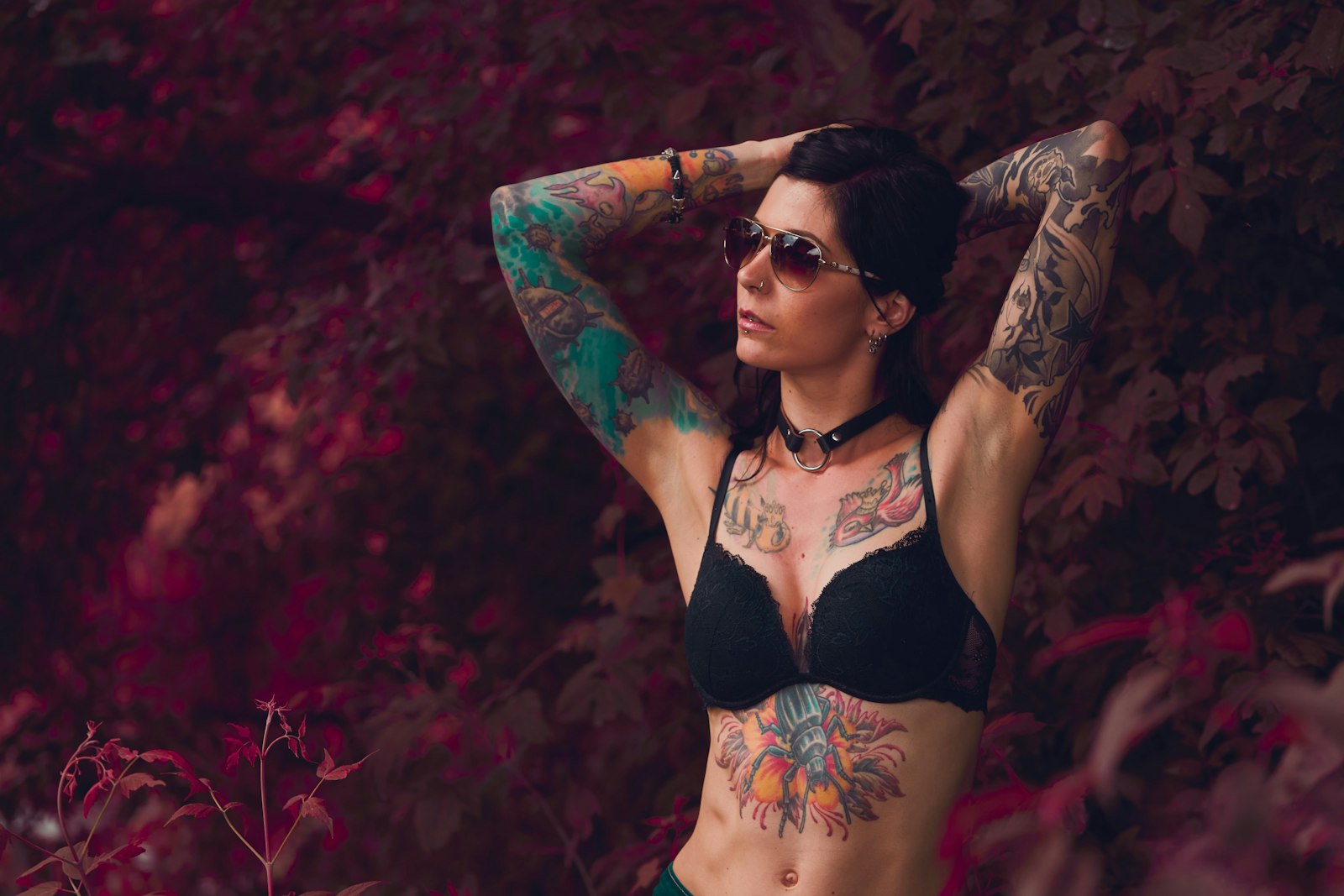
Yes — you can absolutely be a model with tattoos. Ink does not disqualify you from the industry; what it does is shape which work you book and how you present yourself. Some markets treat tattoos as a neutral fact, a few treat them as an asset, and a handful still want bare skin and will ask you to cover up. The honest answer is more useful than a flat yes or no, so here is how tattoos actually play out across modeling in 2026.
The short answer: yes, but it depends on the board
Agencies sort models into boards — commercial, fashion, curve, fitness, and so on — and each one has its own attitude to tattoos. A commercial or alternative board may not blink at a sleeve; a high-fashion or beauty board often wants clear skin so the client can decide what the image says, not your tattoo. Nothing about ink closes the whole industry to you. It simply steers you toward the lanes where your look, tattoos included, is an advantage rather than a complication.
Where tattoos are fine — or even an advantage
In large parts of the market, visible tattoos are completely normal and sometimes exactly what a client is casting for.
- Commercial and lifestyle. Brands selling to real people want faces that look like real people — and plenty of real people have tattoos. Ink rarely rules you out here, especially for apparel, streetwear, and lifestyle campaigns.
- Alternative and editorial. Editorial and "alt" work often wants a strong, distinctive look. A well-placed tattoo can become part of your signature rather than a problem to solve.
- Music, streetwear, and social-first campaigns. Youth and culture brands frequently cast for authenticity, and tattoos read as authentic. Social-led bookings care about your face, your following, and your vibe far more than clear skin.
- Tattoo, ink, and body-art brands. An obvious niche, but a real one: tattoo studios, aftercare brands, and body-art clients specifically want heavily tattooed models.
- Fitness, to a point. Fitness and activewear are generally relaxed about ink, since the focus is physique and energy.
Where tattoos are a barrier
A few corners of the industry still prefer — or require — untattooed skin, and it helps to know them going in.
- High fashion and luxury runway. Designers often want a "blank canvas" so the garment, not the model's ink, tells the story. Visible tattoos can mean cover-up at fittings, or fewer bookings at the very top of fashion.
- Beauty and skincare. Close-up beauty, skincare, and jewellery work usually needs unmarked skin in the frame — a wrist or neck tattoo can take you out of a hand-and-face beauty shot.
- Classic, family-facing commercial. Some conservative brands (certain family, corporate, or pharmaceutical clients) still ask for no visible ink.
- Parts modeling. Hand, foot, and skin-detail work is built on unmarked skin; a visible tattoo on the working body part is usually a hard no for that specific job.
None of these is a life sentence — they are individual job requirements, and most are solved with cover-up rather than a closed door.
Placement matters more than the tattoo itself
Whether a tattoo affects your bookings depends far less on how many you have than on where they are. The industry roughly splits ink into two groups:
- Easy to cover — torso, back, upper arm, thigh. These stay hidden under most clothing and cover up quickly on set, so they rarely limit you.
- Hard to cover — hands, neck, and face. These sit in almost every frame and are difficult to conceal, so they narrow your options the most, particularly for fashion and beauty.
If you are early in your journey and still deciding, this is worth knowing before your next piece: a hand, neck, or face tattoo commits you far more than one on your ribs.
Cover-up: the industry's normal workaround
Covering tattoos on set is routine, not a special measure. Makeup artists use high-pigment body makeup and colour-correcting products (Dermablend is the best-known) to conceal ink for a shoot, and many working models with visible tattoos book untattooed-look jobs this way all the time. Some models learn to apply basic cover-up themselves for castings. It takes time and can restrict very dynamic or swimwear shoots where the makeup might transfer, but for most work it quietly solves the problem — which is exactly why tattoos rule out far less than beginners fear.
How to present tattoos to an agency
The one thing not to do is hide them. Agencies need an accurate picture of your look to pitch you correctly, so show your tattoos honestly in your digitals and mention them at a go-see. A good agency will note the size and placement of each tattoo on your card so clients know upfront — that protects you from being booked for a job you cannot physically do, and from an awkward surprise at a fitting. Presenting ink openly also signals professionalism: you understand your own castability. Build your portfolio to show range both with the tattoos on display and, where relevant, styled so they read cleanly.
Know your market and lean into it
Because tattoos are type-dependent, the smartest move is to aim at the boards that suit your look rather than chase the ones that don't. If you have visible ink, commercial, alternative, streetwear, fitness, and social-first work is wide open; high fashion and beauty are still possible with cover-up but competitive. Read our guide to the types of modeling to find where you fit, then take the standard first steps in how to start a modeling career. Tattoos change the map of your options; they do not take you off it.
Frequently Asked Questions
Can you be a model if you have tattoos?
Yes. Tattoos do not disqualify you from modeling. They influence which categories book you most easily — commercial, alternative, streetwear, fitness and social-first work are very open to visible ink — and how you present yourself, but they do not close the industry to you.
Do modeling agencies accept models with tattoos?
Most do, particularly commercial and alternative boards. A reputable agency will simply record the size and placement of your tattoos on your card so clients know in advance. A few strict high-fashion boards still prefer untattooed models, but that is one lane, not the whole industry.
Can you be a high-fashion or runway model with tattoos?
It is harder but not impossible. Luxury and runway clients often want a "blank canvas," so visible tattoos may mean cover-up at fittings or fewer bookings at the top end. Easily hidden tattoos matter far less here than hand, neck or face ink.
Do models have to cover their tattoos?
Only for jobs that call for bare skin. Covering ink with high-pigment body makeup (such as Dermablend) is a routine on-set practice, so a model with visible tattoos can still book untattooed-look work. Plenty of jobs need no cover-up at all.
Do face, neck or hand tattoos stop you from modeling?
They narrow your options the most, because those areas appear in nearly every frame and are hard to conceal. You can still work — especially in alternative, streetwear and social-first modeling — but fashion, beauty and parts work become much less accessible with ink in those spots.
Ink and all, the first step is the same — get seen. Create your model profile and apply to open castings in your market.