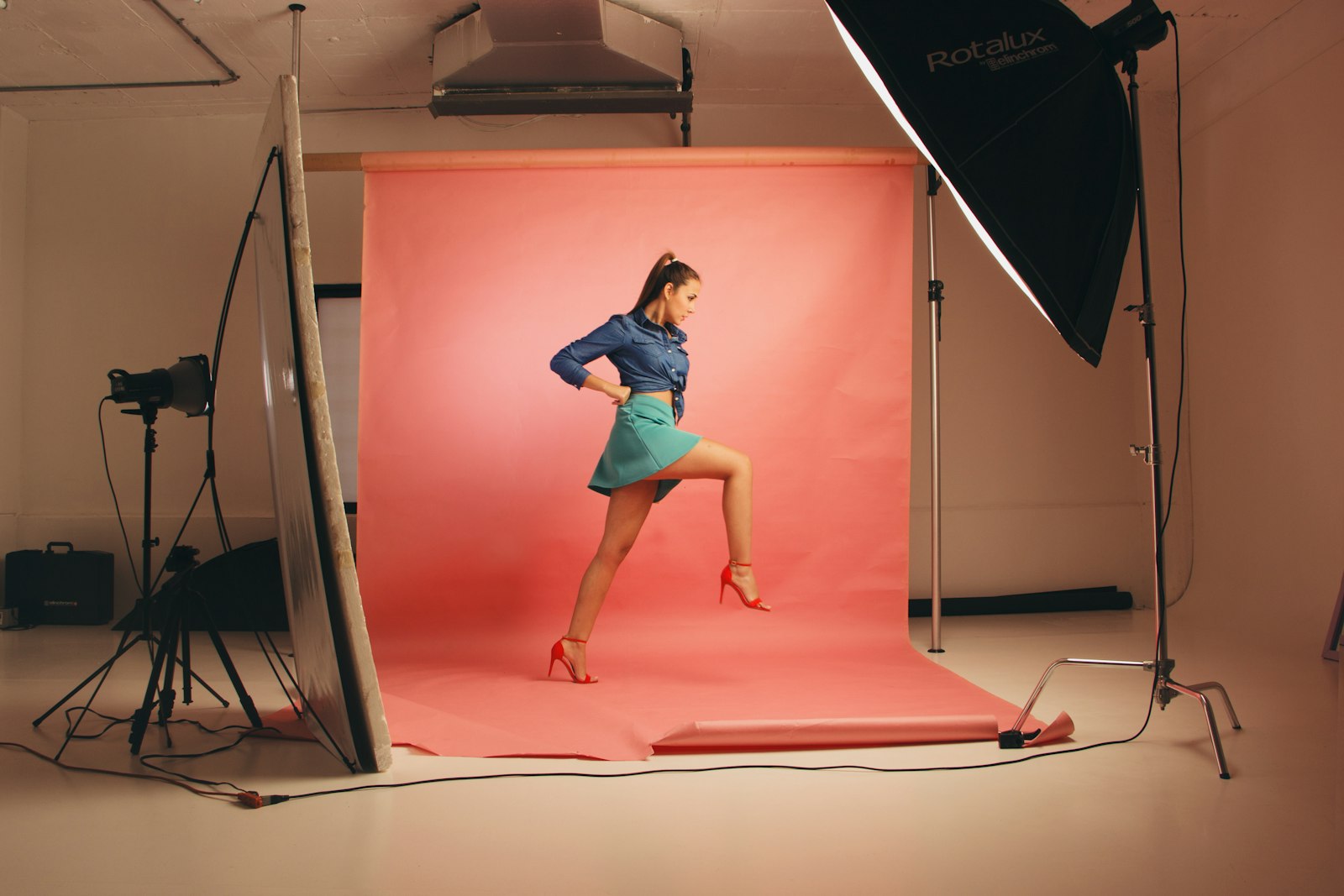
Posing is a skill, not a gift — and it is one of the fastest ways to improve your photos, whether you are shooting your first digitals or building a portfolio. The camera flattens depth, exaggerates tension and reads every awkward hand, so a model's real job is to shape the body and face in ways that look effortless on a flat image. This guide covers the fundamentals — posture, angles, hands, expression and movement — the specific poses that work for headshots, full-length and agency digitals, and the beginner mistakes worth skipping.
Why posing is part of the job
Agencies and clients do not book the person who looks best in the mirror — they book the one who translates on camera. Your portfolio and digitals are the product you are selling, and posing is the one variable on set you fully control. A model who knows how to move gives a photographer ten usable frames a minute; one who freezes gives them a headache. That difference is what gets you rebooked.
The five fundamentals of posing
Almost every strong pose comes back to the same handful of principles. Learn these before you memorise specific poses — they let you improvise instead of running out of ideas after two frames.
- Lengthen your posture. Stand tall, roll your shoulders down and back, and stretch the neck slightly away from the shoulders. Slouching reads as low energy and shortens your frame; length reads as confidence and is the single biggest fix for most beginners.
- Work in angles, not straight-on. Turn your body about three-quarters to the camera, put your weight on your back foot, and bend at least one joint — an elbow, a knee, a wrist. Fully straight, symmetrical limbs look stiff. Small bends create shape and negative space, which is what makes a pose look intentional.
- Give your hands a job. Hands are where beginners tense up. Keep them soft and relaxed, show the side rather than the flat back of the hand, and give them a light task — resting at the hip, grazing the hair, touching the collarbone. Avoid stiff flat palms and tense "claw" fingers.
- Lead with the face. Bring your chin slightly down and forward to define the jaw (it feels unnatural, but it kills a double chin on camera). Tighten the lower eyelids very slightly for a confident, engaged gaze — models call it the "squinch" — and keep the mouth relaxed rather than forcing a smile.
- Keep moving. The best frame is usually the one between two poses. Make small, continuous adjustments — shift your weight, turn your chin, walk toward the camera, sweep your hair — instead of locking into a statue. Movement gives the photographer options and keeps your energy alive.
Poses for each type of shot
Headshot and beauty
Keep it simple: square or slightly angle the shoulders, chin down-and-forward, eyes engaged. The work here is in the eyes and the micro-expressions, not the body. Give a range — neutral, a soft smile, a stronger gaze — so the client can choose.
Full-length and fashion
This is where angles matter most. Weight on the back leg, a bend in the front knee, one hand doing something deliberate. Elongate the line from head to toe and avoid facing the lens flat-on. Think in shapes: triangles made by a bent arm, a hand on the hip, a crossed ankle.
Commercial and lifestyle
Relatable beats dramatic. Natural smiles, open body language, the sense that you are a real person mid-moment rather than a statue. Commercial clients are selling a product to everyday customers, so approachability outperforms editorial edge here.
Editorial
The opposite end: angular, high-energy, sometimes deliberately strange. Editorial rewards strong shapes and attitude over prettiness. This is the hardest register for beginners, so build it once the basics are automatic.
Posing for your agency digitals
Digitals (polaroids) are the exception to all of the above. Agencies want them plain and honest — natural light, minimal styling, a clean headshot, a full-length front and a three-quarter, hands relaxed at your sides. The point is to show your real proportions and face without the flattery of a professional shoot, so keep the posing minimal and let the agency see you. Our guide to shooting digitals covers exactly what to send.
Common beginner mistakes
- Freezing and holding your breath. Tension shows instantly. Breathe, roll your shoulders between frames, and reset.
- Over-posing. Trying to do too much at once reads as forced. One clear idea per frame beats five competing ones.
- Forgetting the extremities. Hands and feet are the first things to look awkward. Point a toe, soften the fingers, and they stop pulling focus.
- Repeating the same pose. If every frame looks identical, the shoot yields one usable image. Change something small each time.
- Posing too big for the job. Editorial drama on a commercial catalogue shoot looks wrong. Match your energy to the brief.
How to practise posing
Posing improves with reps, and you do not need a photographer to get them.
- Use a mirror, then a camera. The mirror teaches you what a pose feels like; your phone's self-timer or a short video teaches you what it actually looks like — which is often different.
- Film yourself moving. Record 20 seconds of continuous movement, then scrub through frame by frame and screenshot the strong ones. This trains your eye for your own best angles.
- Study working models. Look at how models in your category actually stand and move — browse the model catalogue and pay attention to hands, weight and chin, not just the outfit.
- Shoot a test. A collaborative test shoot (TFP) with a photographer builds both your portfolio and your comfort on camera. If you are just starting out, pair it with our guide on how to start a modeling career.
Frequently Asked Questions
How do beginners pose for photos?
Start with posture: stand tall, shoulders down and back, weight on your back foot, and bend one joint so you are not perfectly straight. Bring your chin slightly down and forward, keep your hands soft with a light task, and make small continuous movements instead of freezing. Those five habits cover most of what makes a pose look natural.
What do I do with my hands when modeling?
Keep them relaxed and give them a job. Show the side of the hand rather than the flat back, and rest them somewhere deliberate — a hip, the collarbone, lightly in the hair. Tension and stiff flat palms are the giveaway that a model is new, so soft, purposeful hands make an immediate difference.
How do you pose to look taller and slimmer?
Lengthen the whole line of your body: stand tall, extend the neck, and put your weight on your back leg with the front knee slightly bent. Angling your body three-quarters to the camera rather than facing it straight-on creates shape and reads slimmer, and a chin pushed slightly down-and-forward defines the jaw.
How should I pose for modeling digitals?
Barely pose at all. Agency digitals are meant to show your real look — natural light, plain background, minimal styling, hands relaxed at your sides. Give a clean headshot, a straight full-length and a three-quarter, and let the agency assess your proportions honestly rather than a stylised pose.
Can you learn to pose, or is it natural?
It is almost entirely learned. A handful of models are naturals, but the vast majority build the skill through reps — mirror work, filming themselves, and test shoots. Posing is a technique like any other, which is good news: it means you can get visibly better in weeks.
Ready to put it in front of the people who book? Create your model profile and apply to open castings in your market.